
Cycling to Nin: History, Sandy Beaches and Healing Mud Bath!
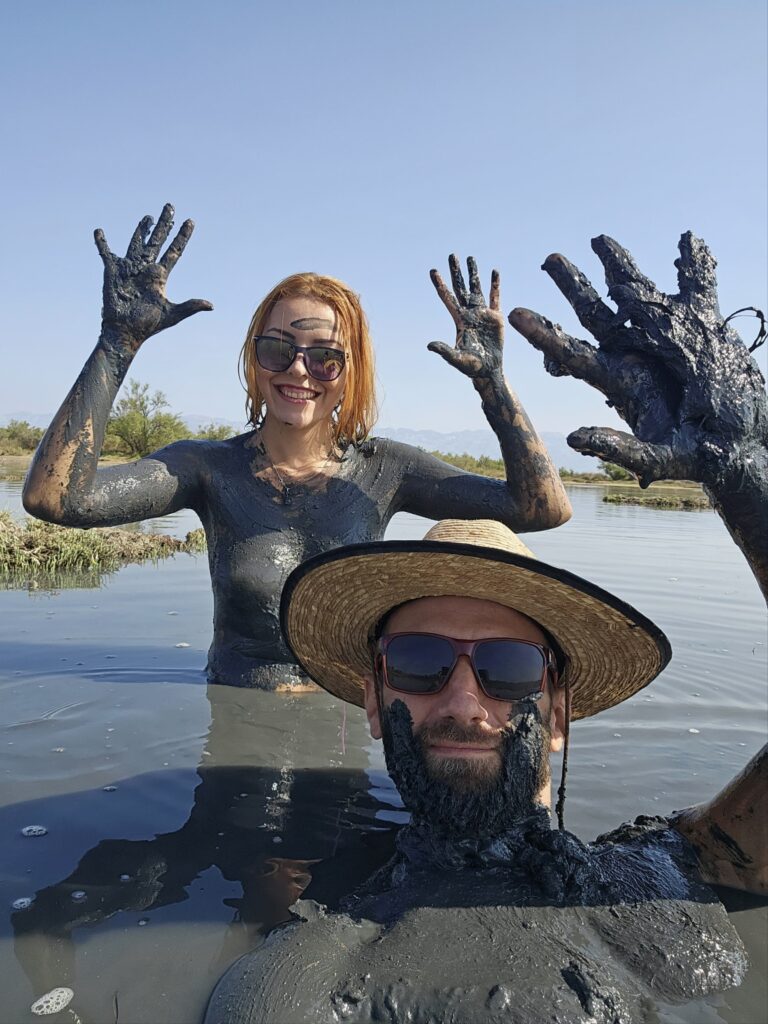
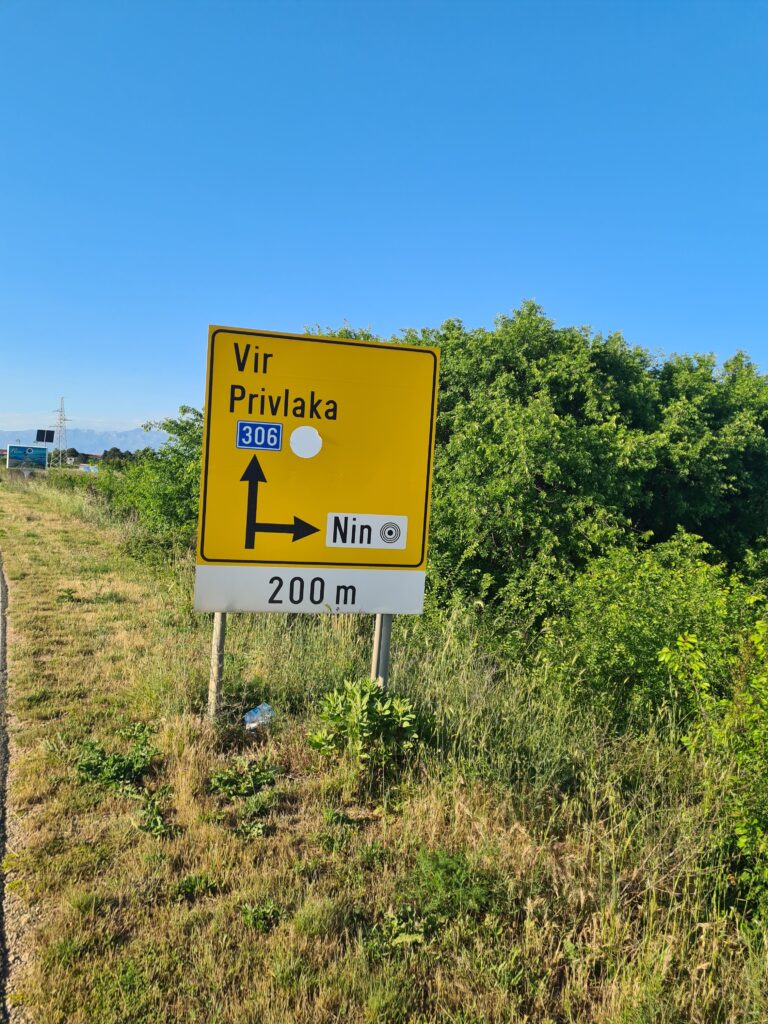
Here we are in Nin, at the famous Queen’s Beach (Kraljičina Plaža), a destination small in size, but giant in history. Located 23 km from Zadar, this village holds secrets that few tourists truly get to explore. For those starting their journey at Hop And Go eBikes, the best spot for e-bike rentals, the route is even shorter: just 16 km. Whenever I recommend Nin to our clients, the main topic is always the famous medicinal mud. It is, after all, an exotic and unique experience, perfect for having fun and relaxing with family and friends. However, in this post, I want to take you deeper. I want to reveal the secrets and the rich historical background of this place. That way, when you arrive, you won’t just admire the scenery, you will understand the true significance of being in one of Croatia’s most symbolic towns.
Get ready, because Nin is so much more than just our beloved mud!
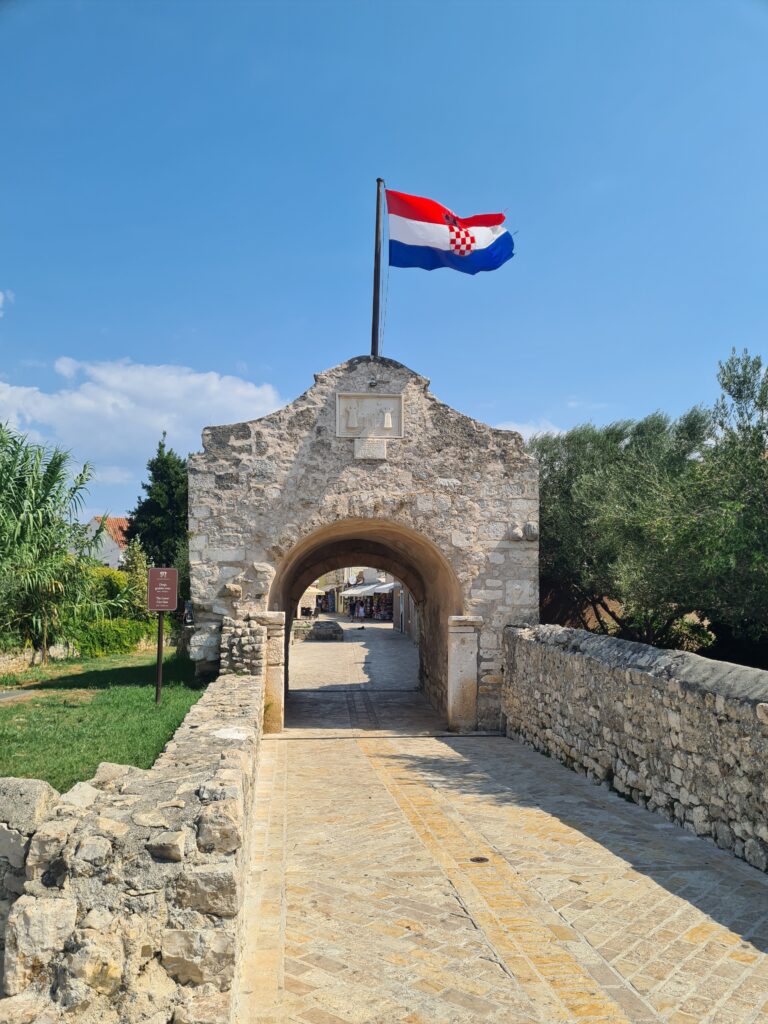
Did you know? Nin was the first major political and religious center of Croatia. In the 7th century, as Croatian tribes migrated from Central Europe and reached the crystal-clear waters of the Adriatic, they chose Nin as their administrative seat. For nearly 400 years, this was the home of the first leaders and kings, where crucial decisions that would shape the country’s destiny were made. Today, Zagreb is the political and administrative capital of Croatia, but the heart of the nation began beating right here, in these small streets surrounded by the sea.
Church of St. Nicholas (Sveti Nikola)
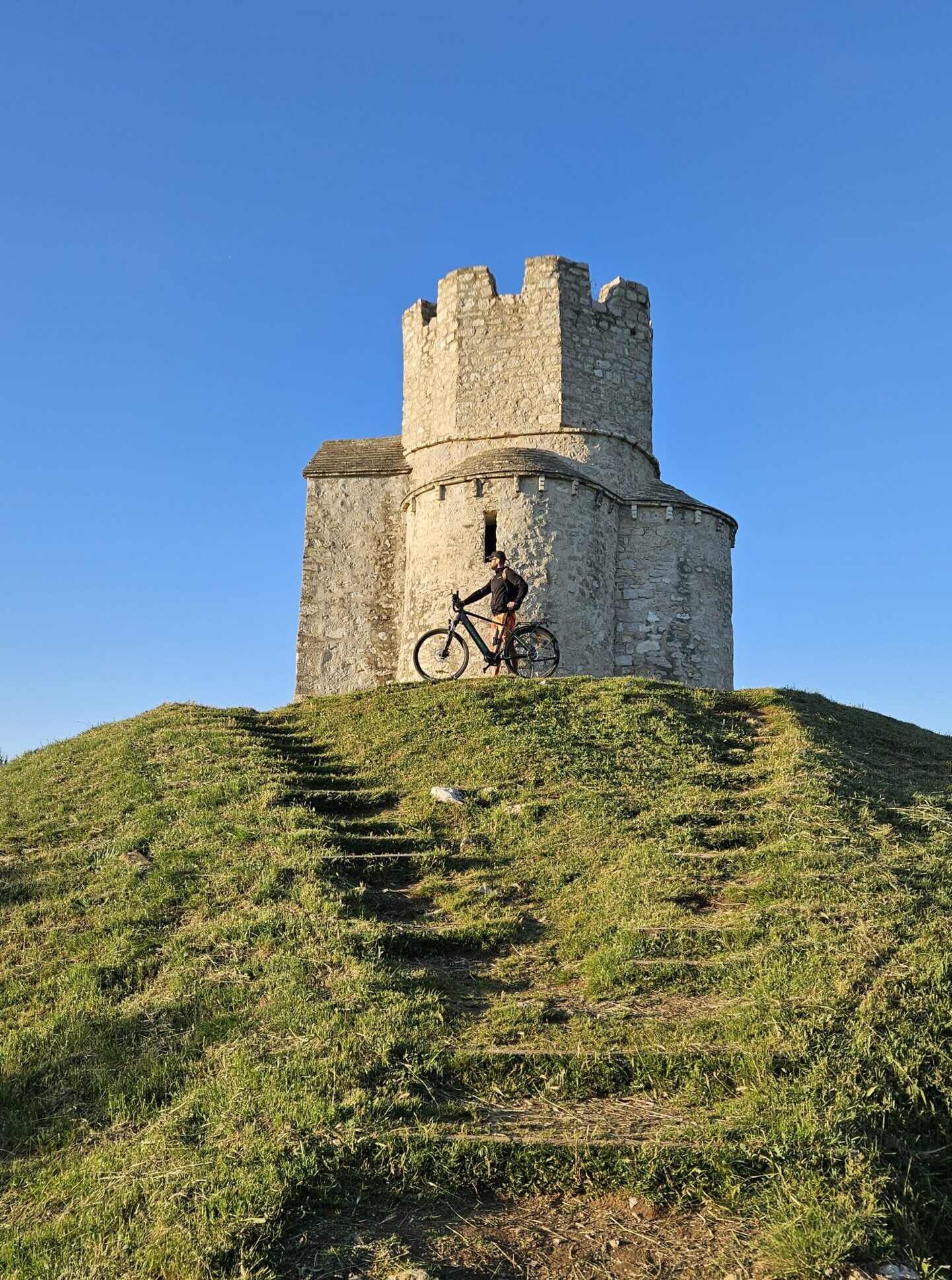
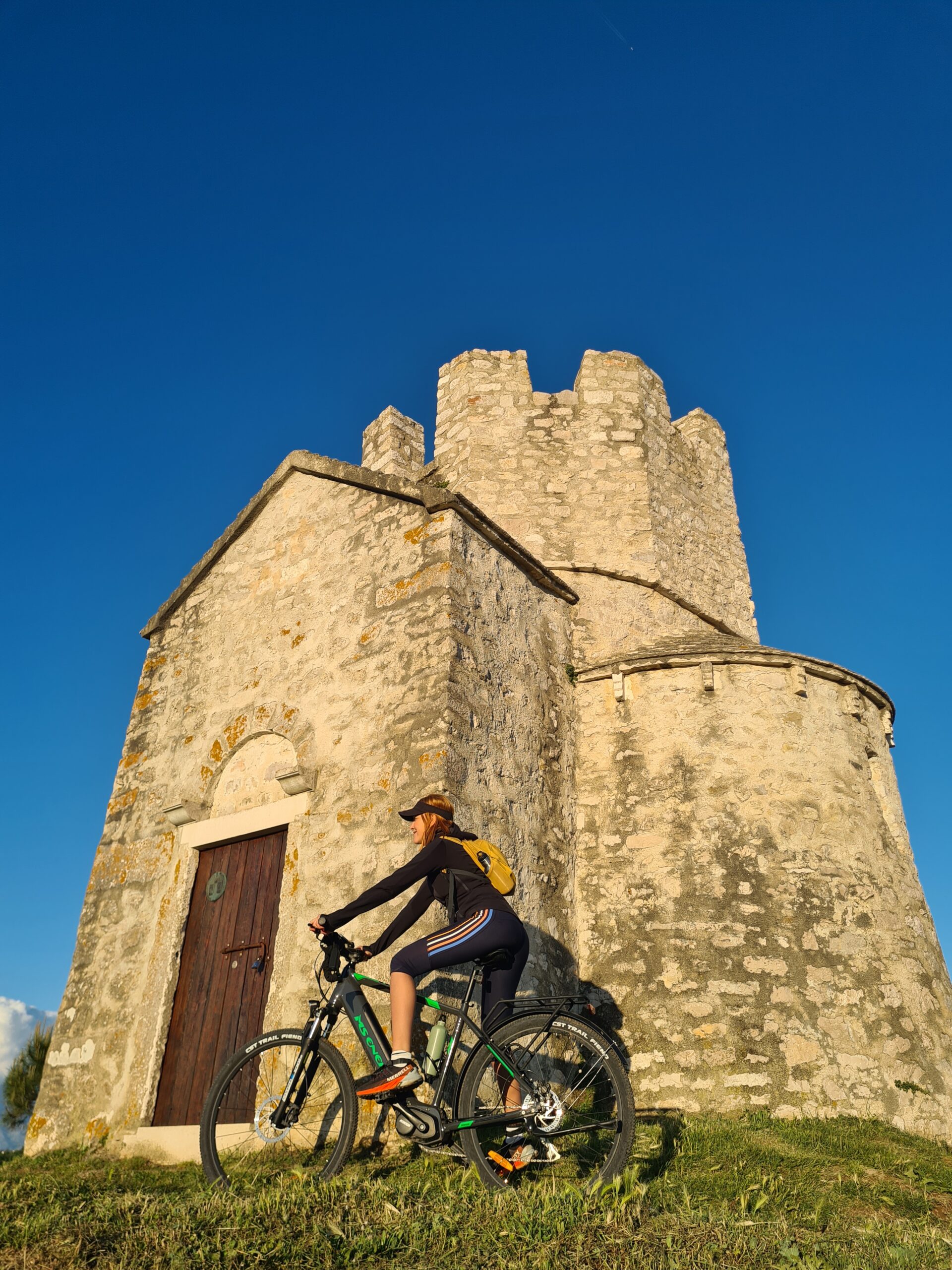
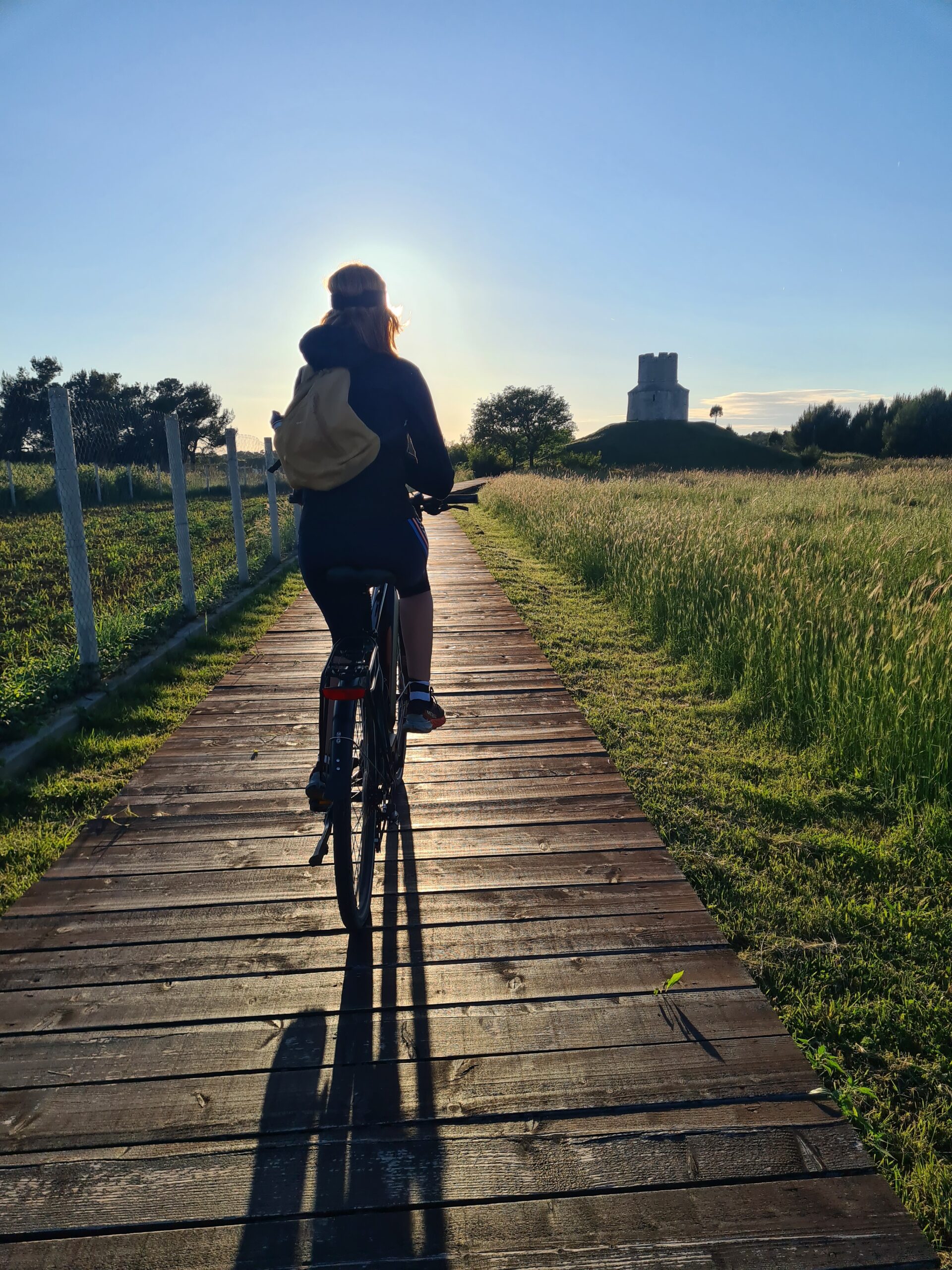
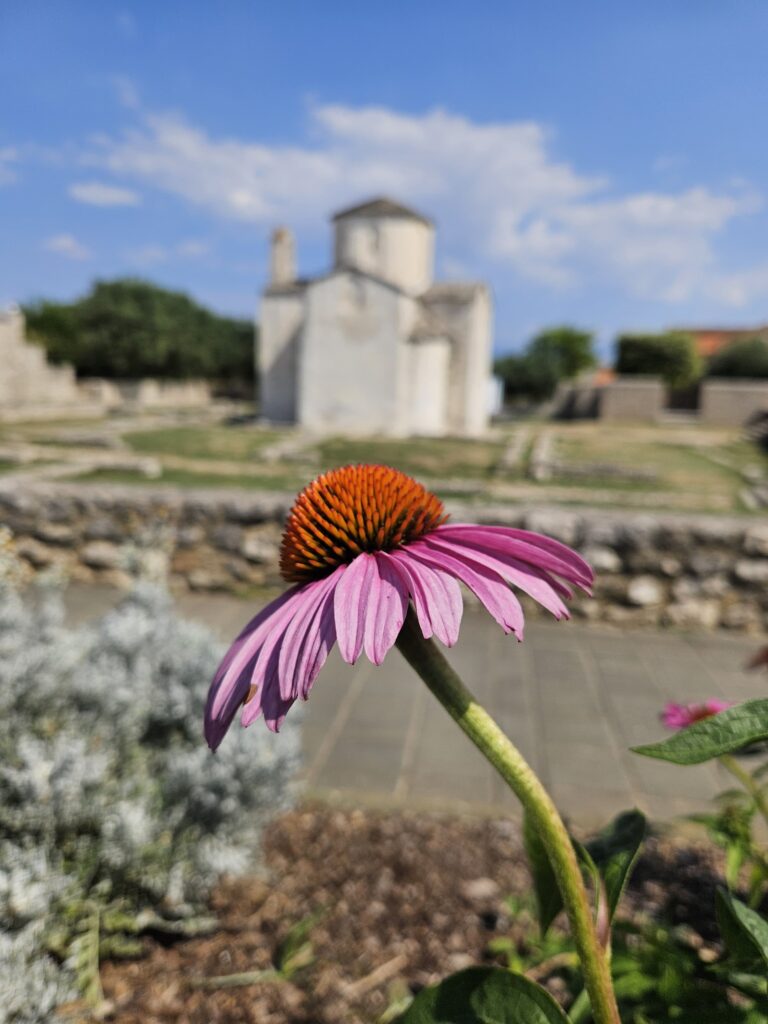
Just before reaching Nin, you will spot a small church that looks like a fortress tower, perched on top of a hill. This is the Church of St. Nicholas. Tradition says that seven kings were crowned in Nin, and after the ceremony, they followed a fascinating ritual: they would ride with their entourage to the top of this hill, where the new monarch would draw his sword and point it toward the four cardinal points. This gesture symbolized his vow to defend the Kingdom of Croatia against enemies coming from any direction.
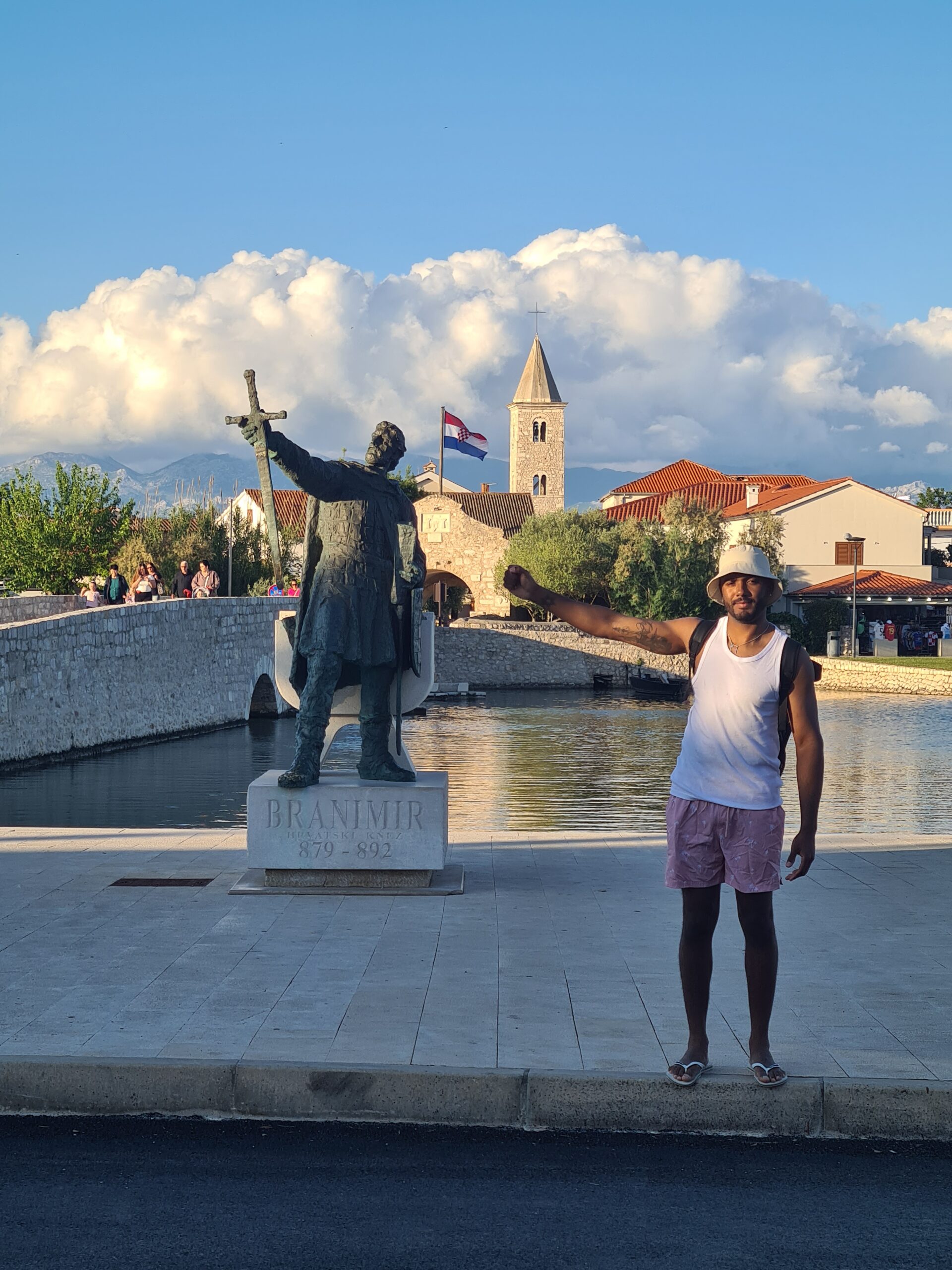
Among the great figures of that era is Duke Branimir, whose statue greets everyone at the city’s entrance. In 879, Branimir received official recognition from Pope John VIII, who legitimized him as a ruler and recognized Croatia as a sovereign state the official birth of the nation before the world. Later came Tomislav (910–928), the first to be crowned King, unifying the Croatian lands in 925.
Tomislav: The King That Unified Croatia
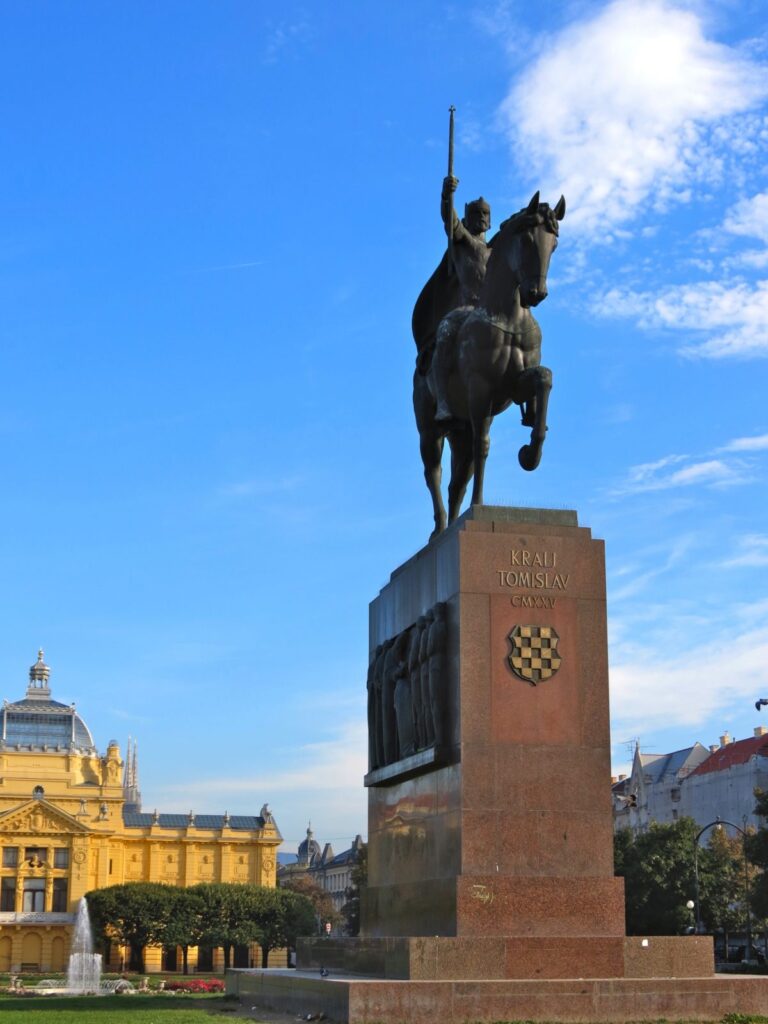
Tomislav (910–928 AD) was the first ruler to be officially titled King. Before him, the territory was divided into two provinces: Dalmatia and Pannonia. In 925, he unified these lands and was crowned the first King of Croatia with the blessing of Pope John X.
Nin was one of his favorite and most important residences. The King lived there during strategic periods, attending crucial meetings with papal legates and the famous Bishop Gregory of Nin (Grgur Ninski). Beyond its political importance, Nin was a natural fortress: protected from sea attacks because the waters are extremely shallow, making it impossible for enemy ships to enter without running aground.
While there is no statue of him in Nin, his presence is imposing in Zagreb, the capital, in the famous square that bears his name Trg Krajia Tomislava.
Gregory of Nin (Grgur Ninski)
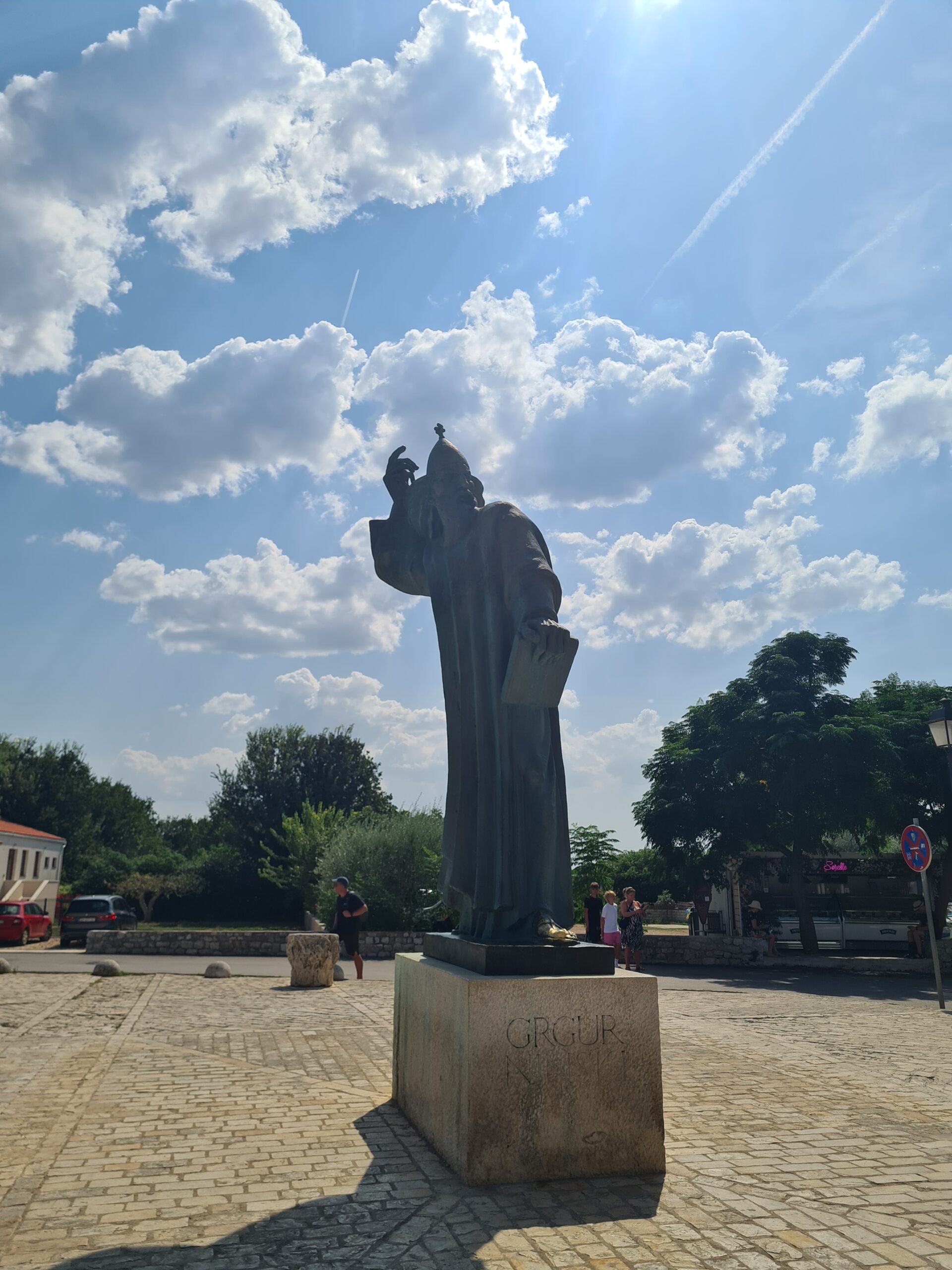
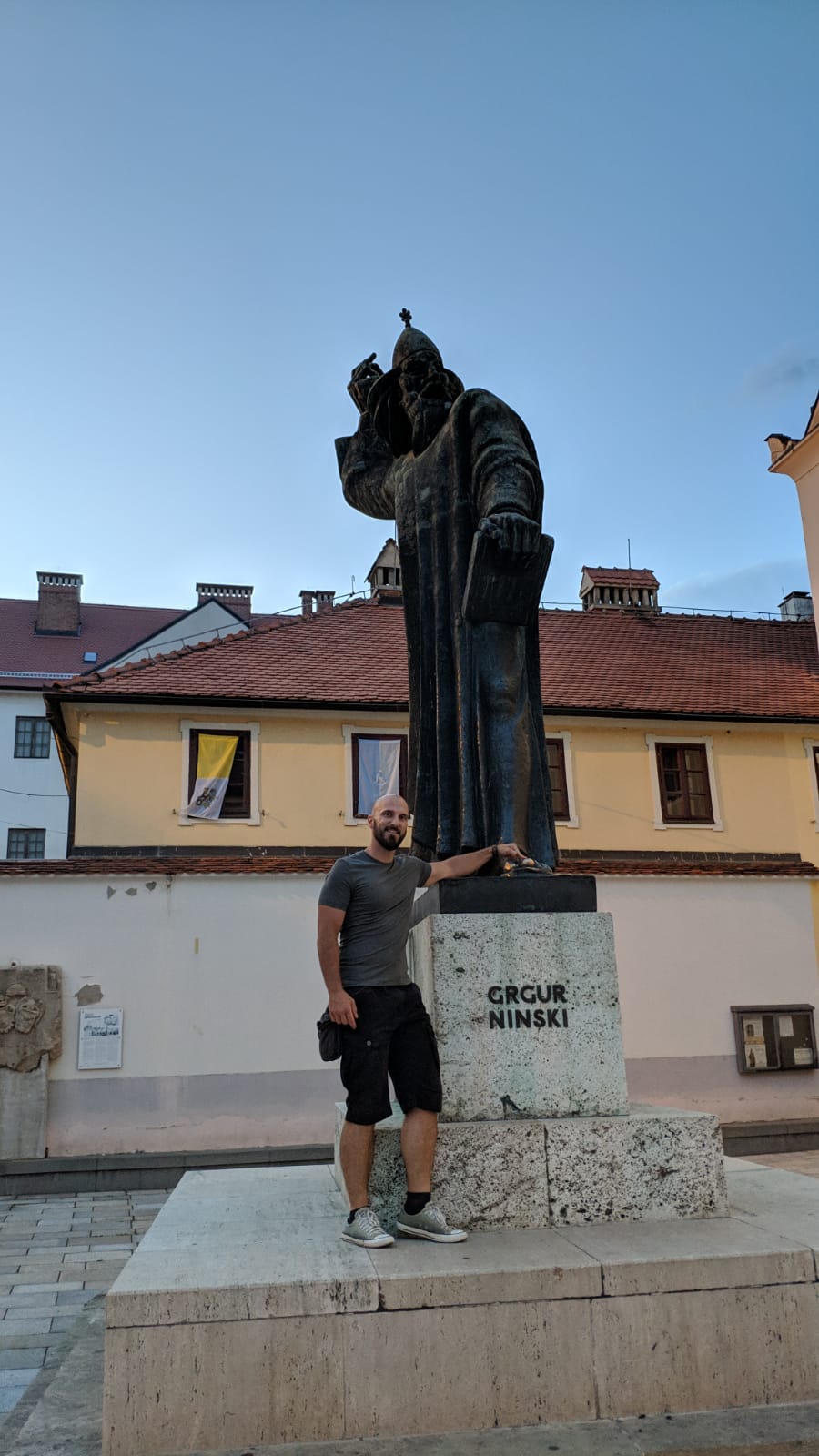
Bishop of Nin between 900 and 929, Grgur Ninski is considered a true national hero. At a time when the Catholic Church required masses to be celebrated exclusively in Latin, Grgur fought fiercely for services to be held in the Croatian language. He became the ultimate symbol of cultural resistance and the preservation of the people’s identity.
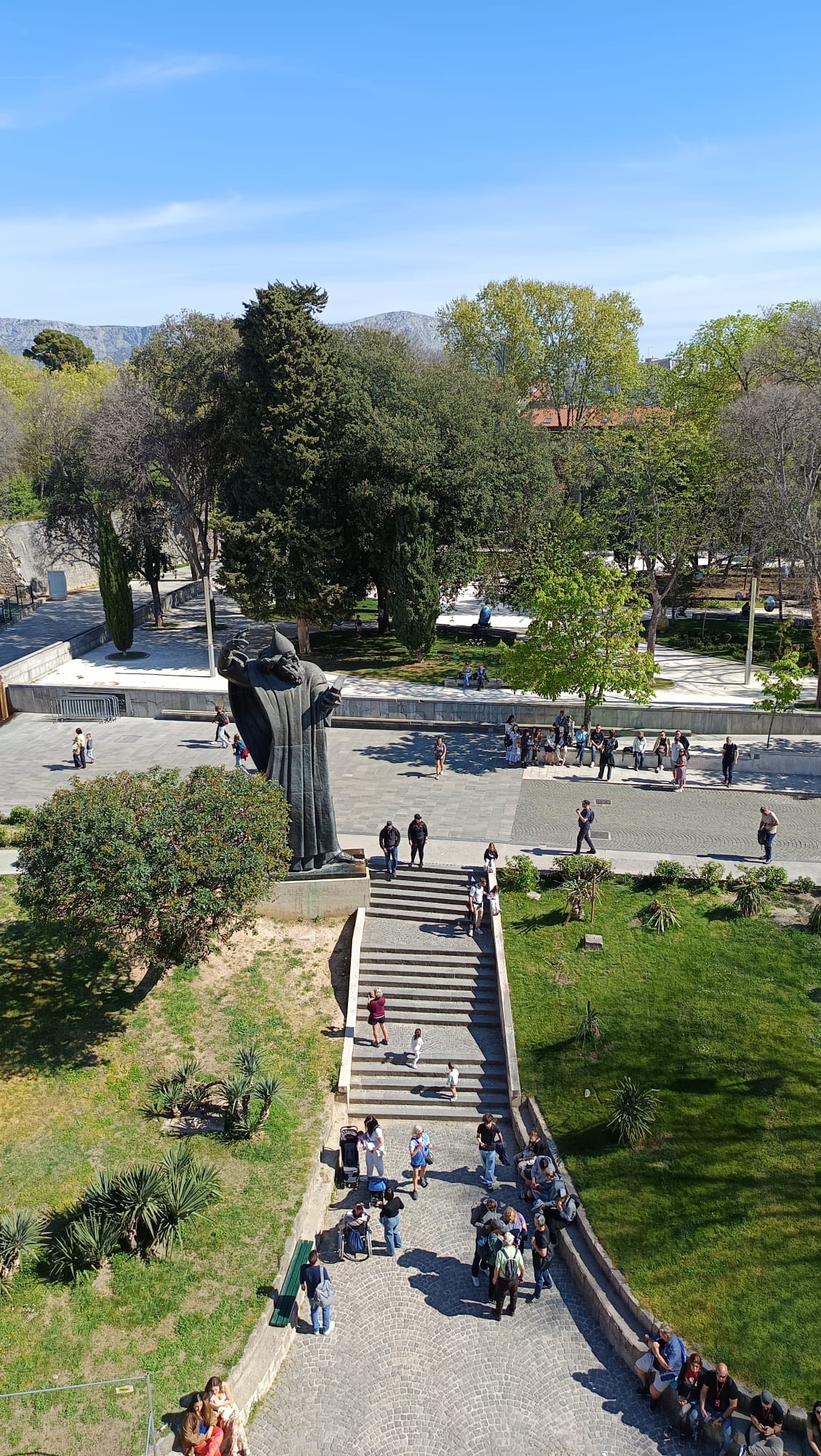
If you have already visited Split or Varaždin, you surely recognized the imposing figure of the Bishop in his monumental statues. However, it is here in Nin his true home that his image carries an even more special meaning.
Fun Fact: Tradition says that rubbing the statue’s big toe brings good luck and ensures your wishes come true. Around here, the toe is already shining gold from being polished by so many visitors. It’s worth a try, right?
Roman Fragments
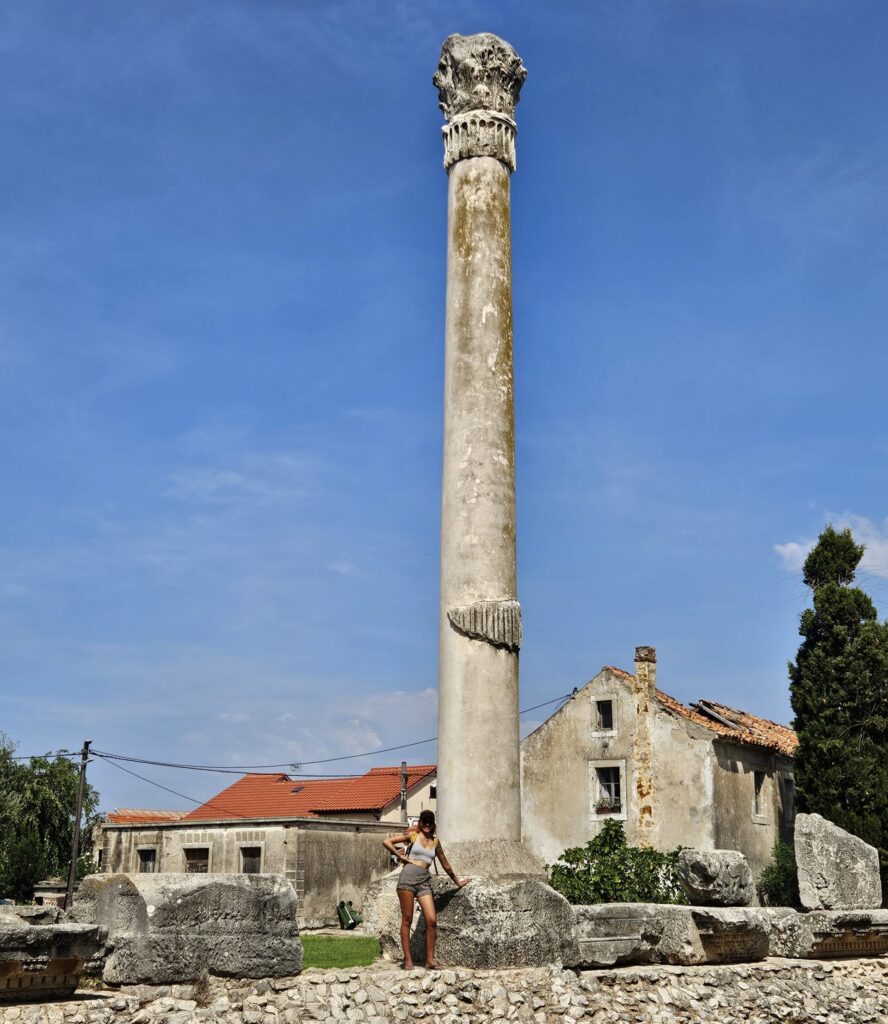
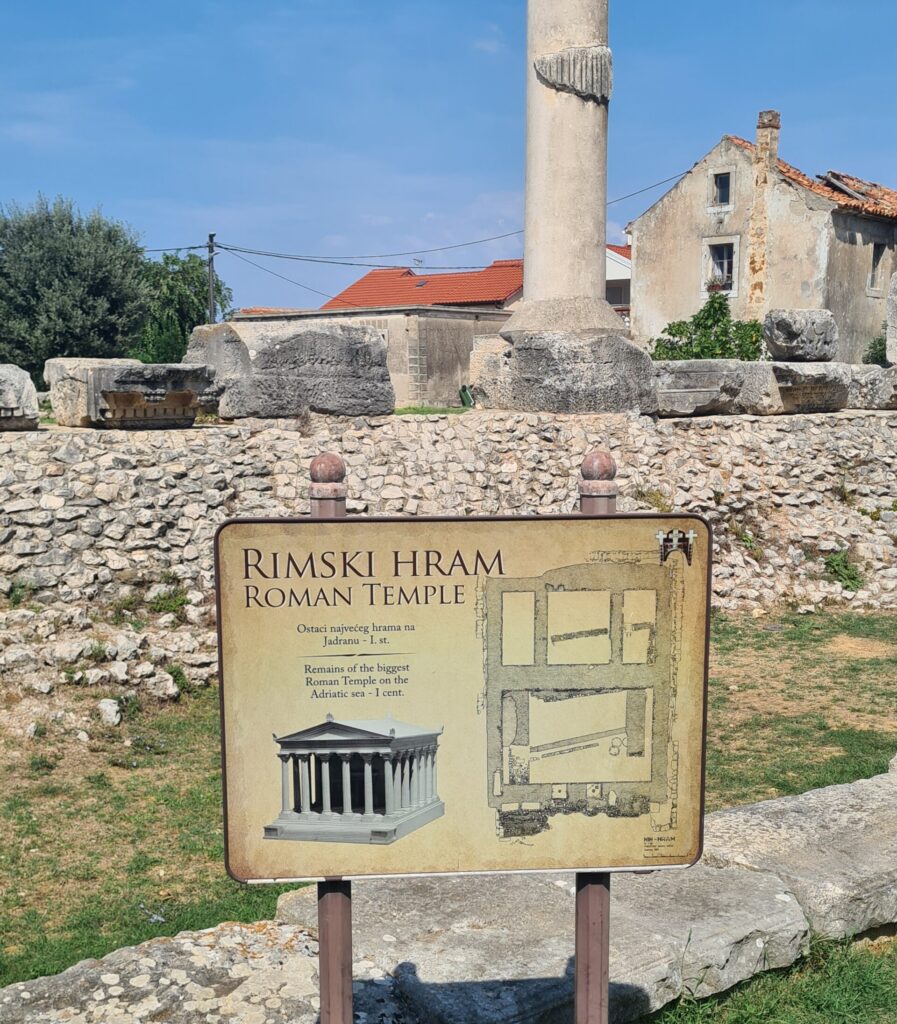
After probably visiting the grand ruins of the Roman Forum in Zadar, you will be surprised to come across this monumental column in Nin. These are the remains of a single, colossal Roman temple from the 1st century the largest on the entire eastern coast of the Adriatic.
It is a fascinating visual contrast: the ruins of what was once a majestic temple are now surrounded by charming houses and ancient stone walls. This mix of eras makes the scenery truly unique and provides the perfect backdrop for a memorable photo with this historic monument.
Queen Jelena: The Glourious
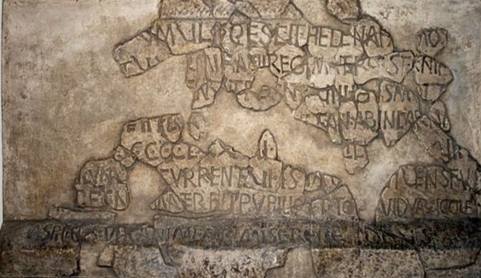
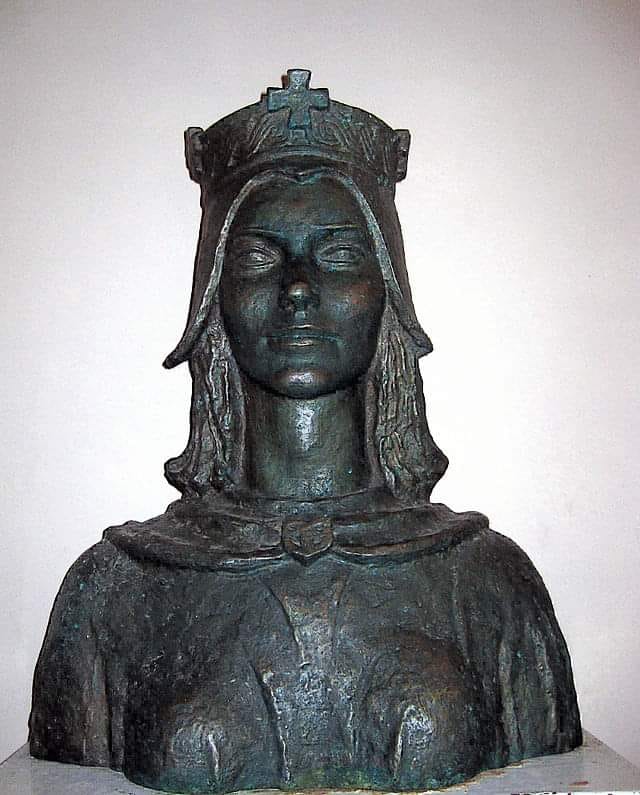
One of the few female figures of her time whose existence is proven by archaeological records, Queen Jelena is a fundamental part of our history. Following the death of her husband, King Mihajlo Krešimir II, she took power as regent, ruling with wisdom until 976 AD, while their son, Stjepan Držislav, was still too young for the throne. In the 10th century, Nin served as one of the court’s favorite summer retreats. Jelena is widely associated with the city’s prestige; she was a great benefactor, financing the construction of churches and dedicating herself to supporting orphans and widows. Her existence was immortalized through her sarcophagus, discovered in 1898 in the ruins of St. Stephen’s Church in Solin, with stone inscriptions that confirmed her title and enduring legacy.
Nin’s Famous Mud and Sandy Beaches

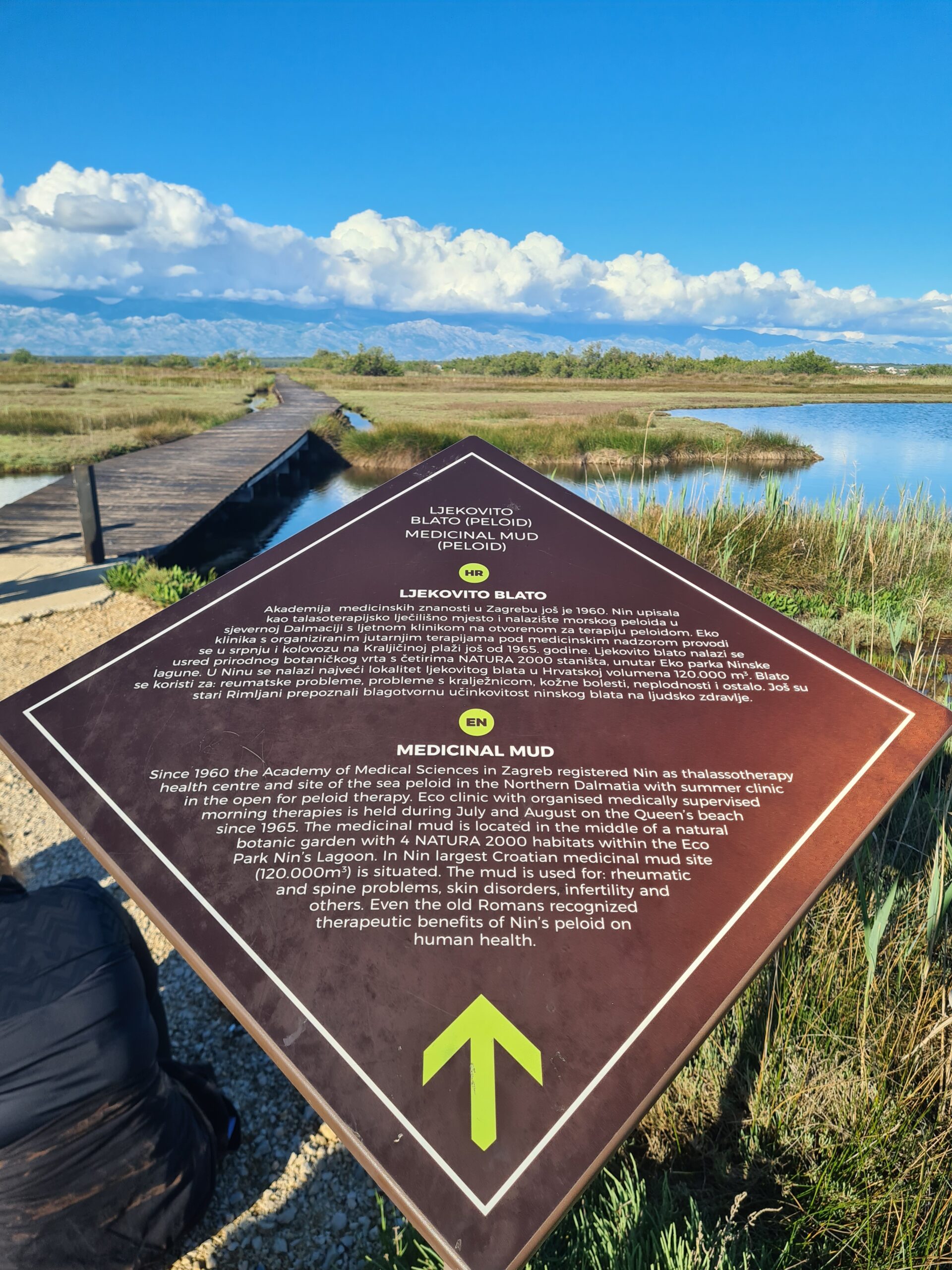

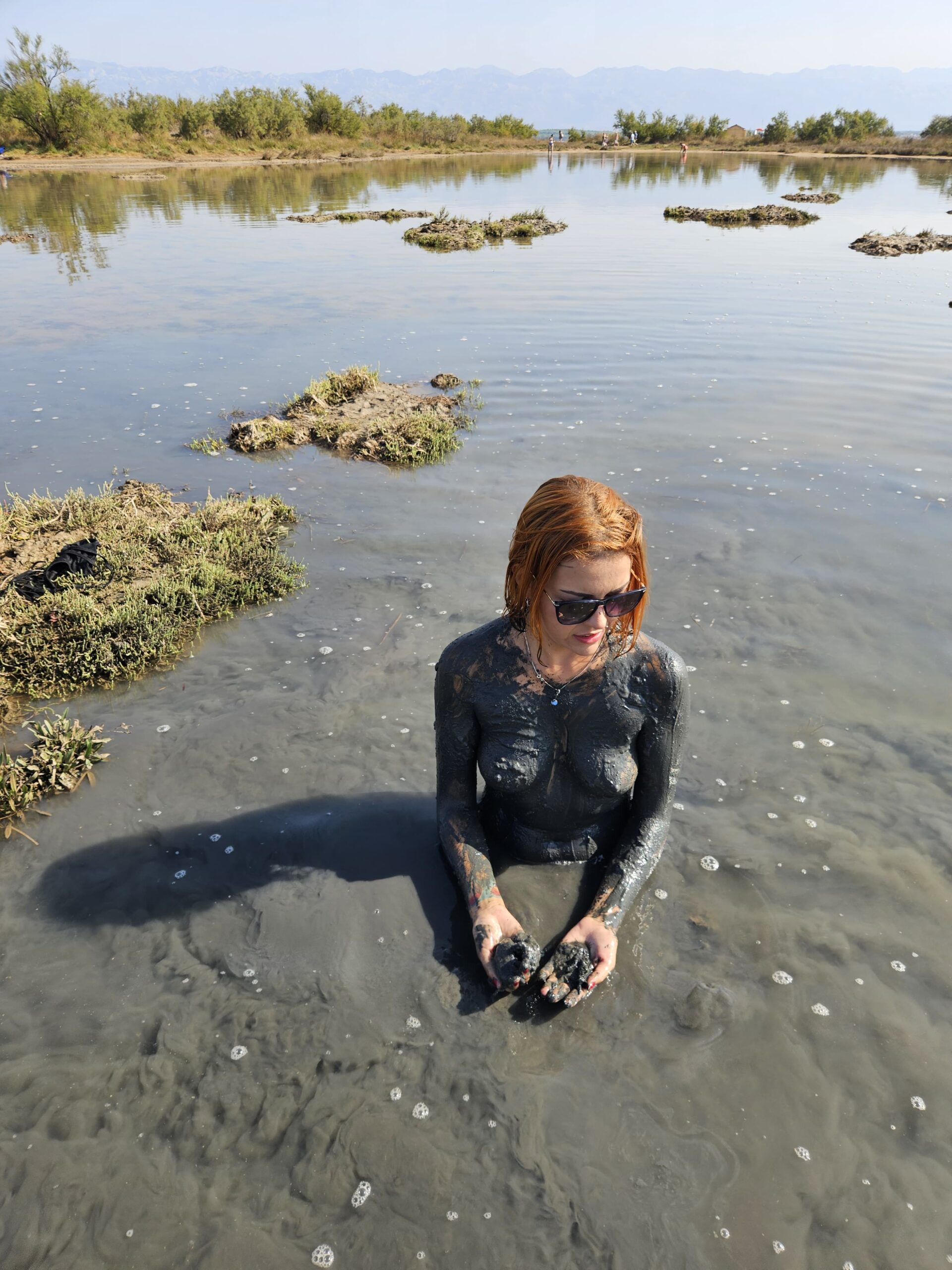
The Magic of Medicinal Mud (Peloid)
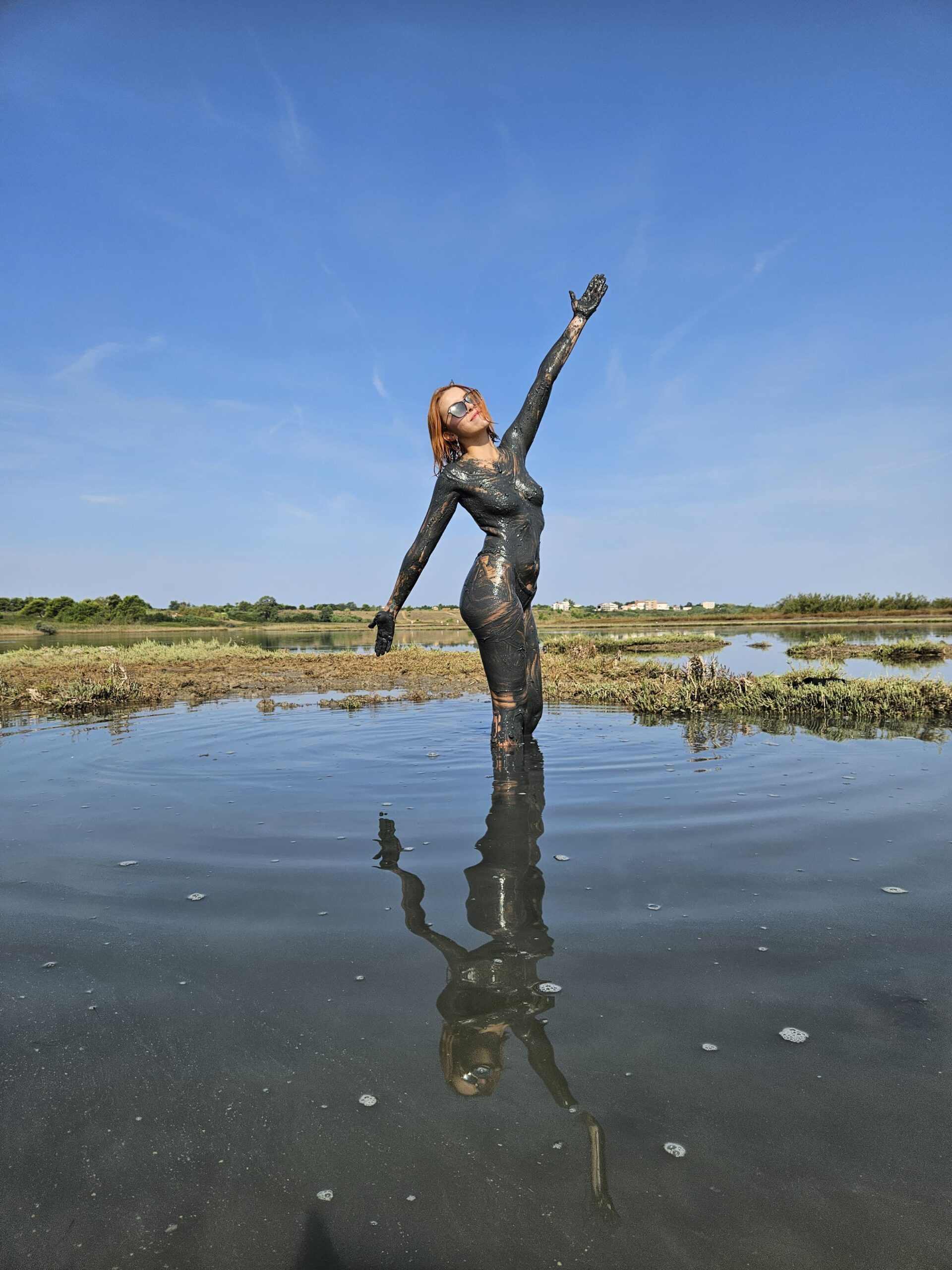
Yes, we are completely covered in mud, but don’t worry: it’s Royal mud! xD
The use of medicinal mud in Nin dates back to the Roman Empire. Archaeologists have found remains of baths and thermal springs in the area, proving that even 2000 years ago, the Romans were already aware of its healing properties.
This mud, technically known as Peloid, is incredibly rich in minerals. When applied and left to dry in the sun, it creates a natural compress effect on the skin that boosts circulation, relieves joint pain, and helps treat various skin conditions. Beyond being a natural spa treatment, it’s also guaranteed fun! Mud Spa Nin.
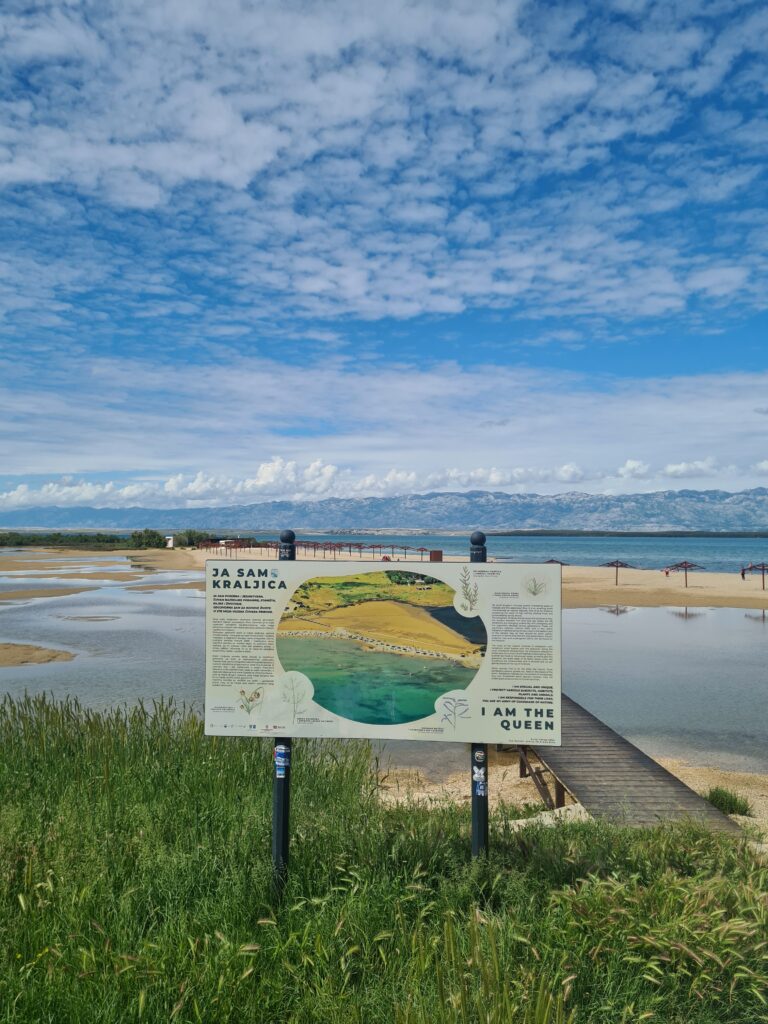
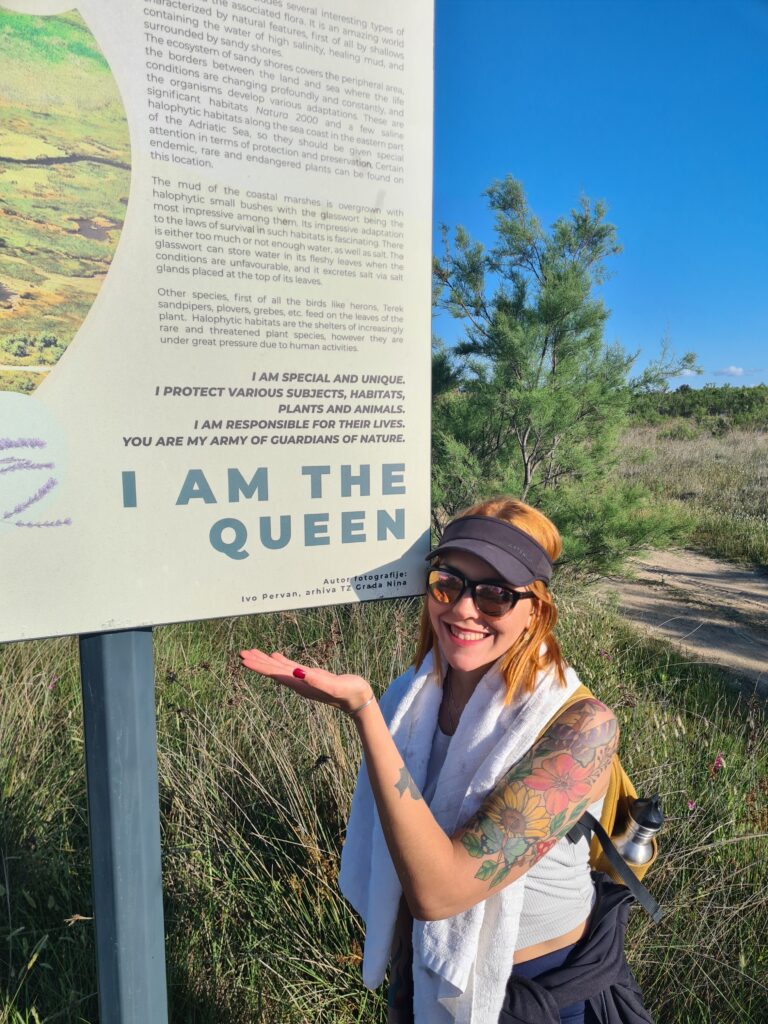
Queen’s Beach (Kralijičina Plaža)
The Sand Phenomenon in Nin.
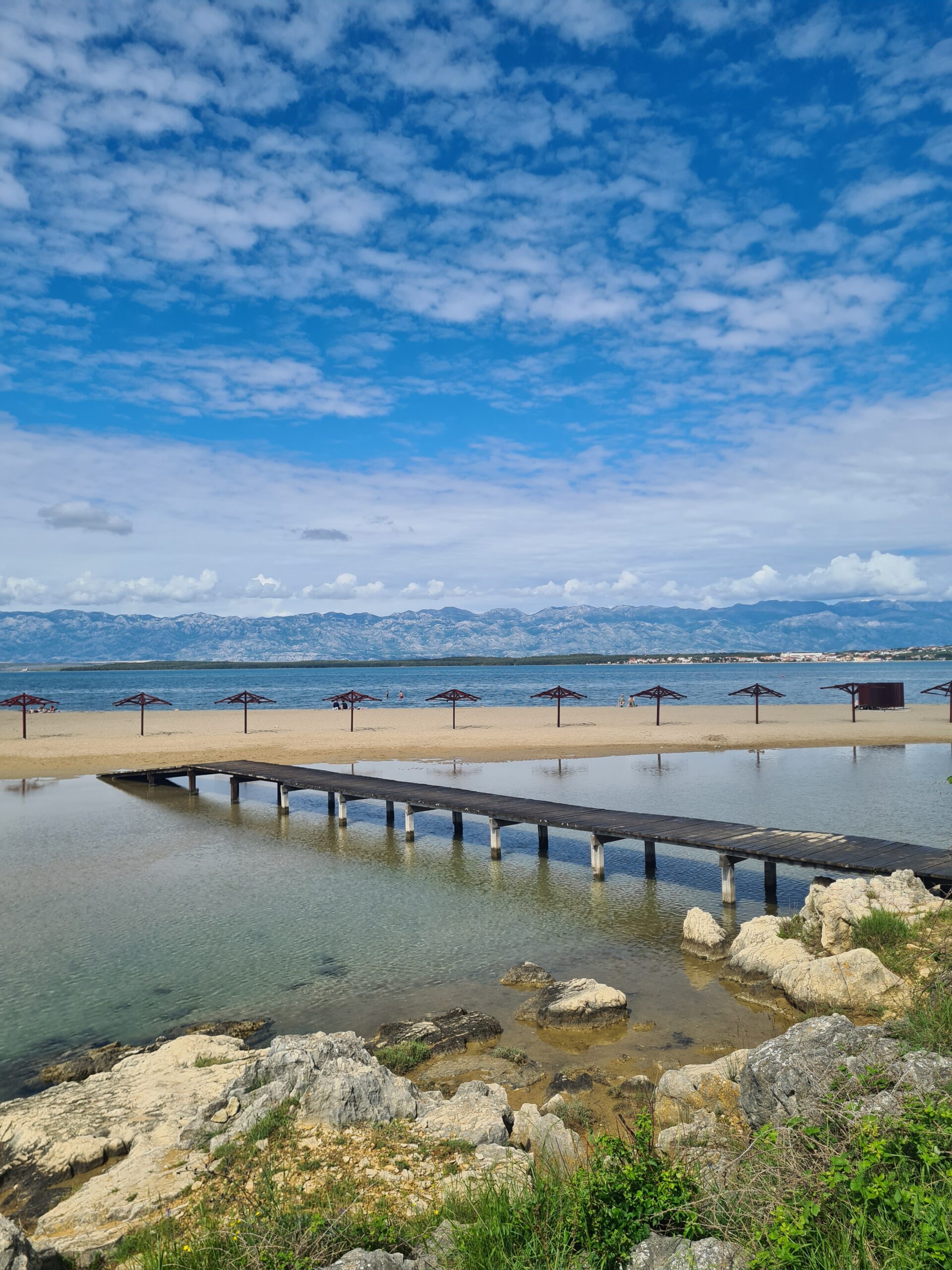
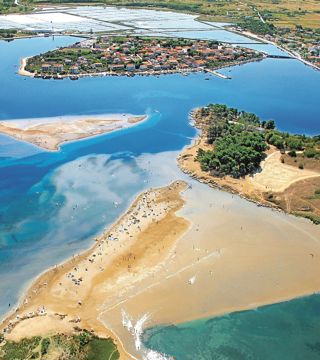
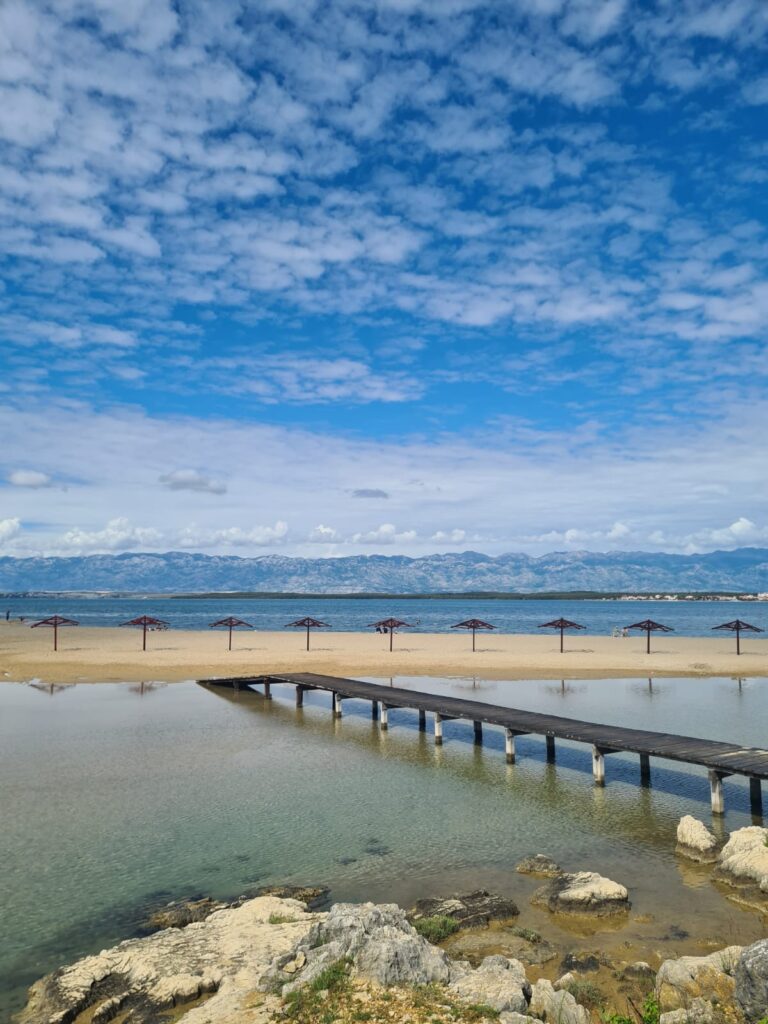
If you have visited Croatia before, you probably know that the beaches here are predominantly made of pebbles and limestone. However, Nin is a fascinating geographic exception due to its shallow lagoon. The average depth is only about 1 meter, allowing you to walk hundreds of meters into the sea with the water still at knee height.
Not to mention, the water is much warmer here usually 2°C to 3°C warmer than in Zadar. It is the perfect spot to stretch your legs and cool off after the ride. The beach was named Queen’s Beach in honor of King Tomislav’s wife. While there are no official historical proof, legend says this was the Queen’s favorite place to relax.
The Journey and Beyond
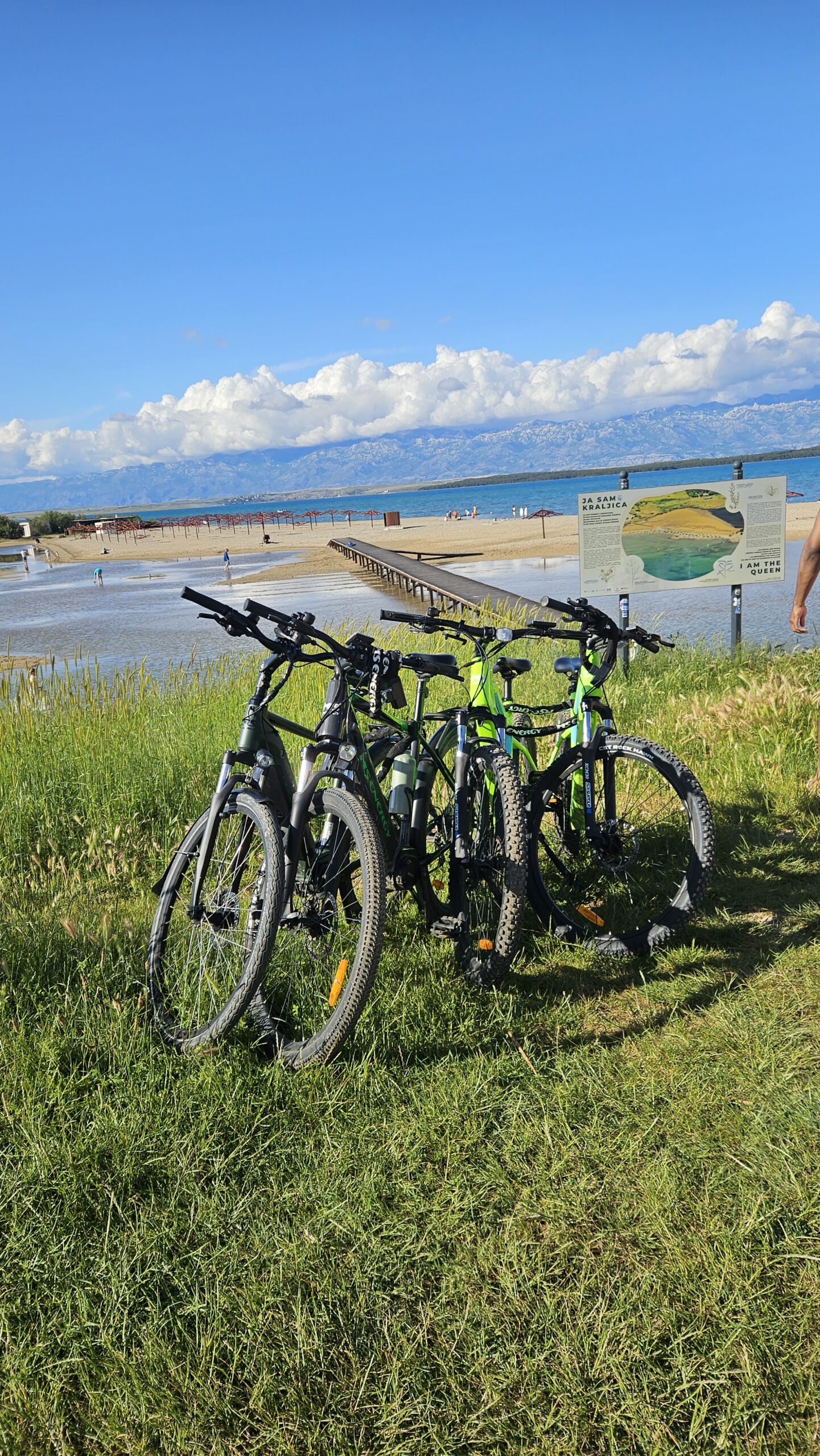
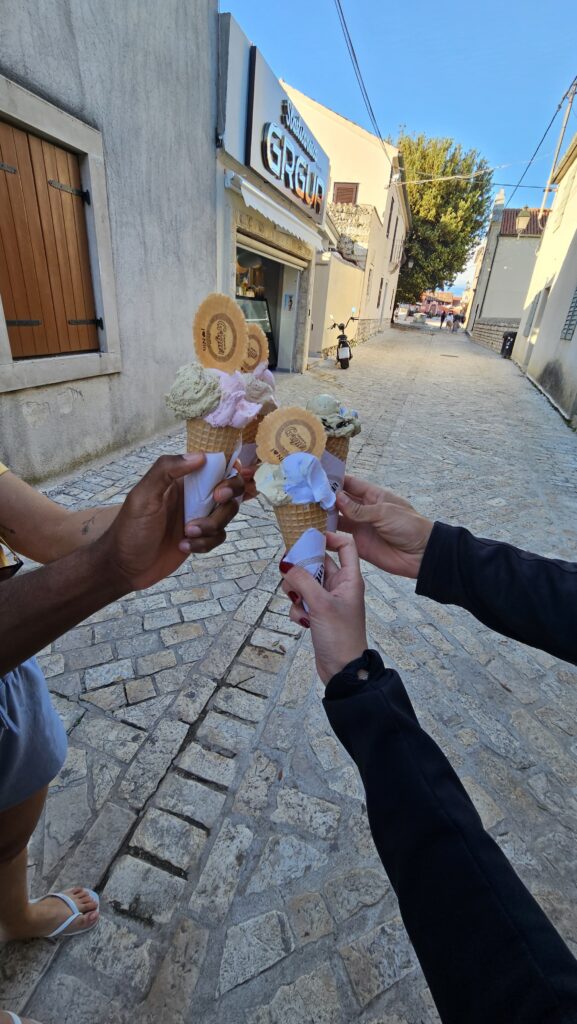
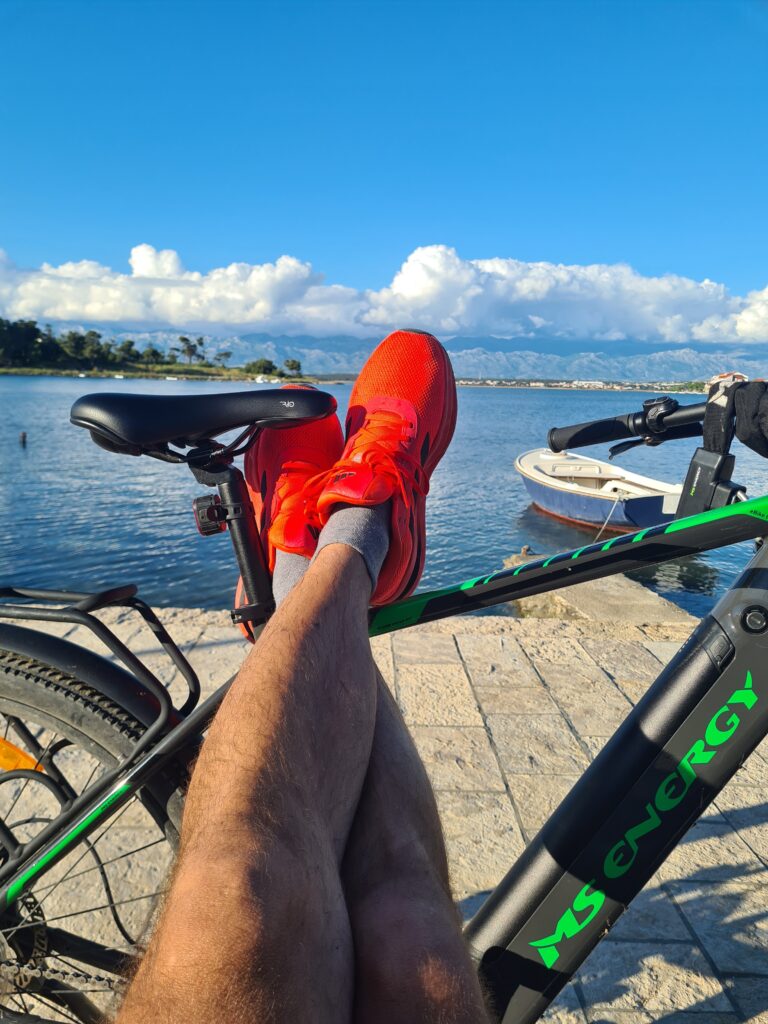
Last but not least, let’s talk about reaching this glorious place on two wheels. To experience, feel, and truly live Nin is something unique. Whether you’re having fun with your family in the medicinal mud, enjoying the rare sandy beach, or stopping for a delicious gelato which is locally famous!
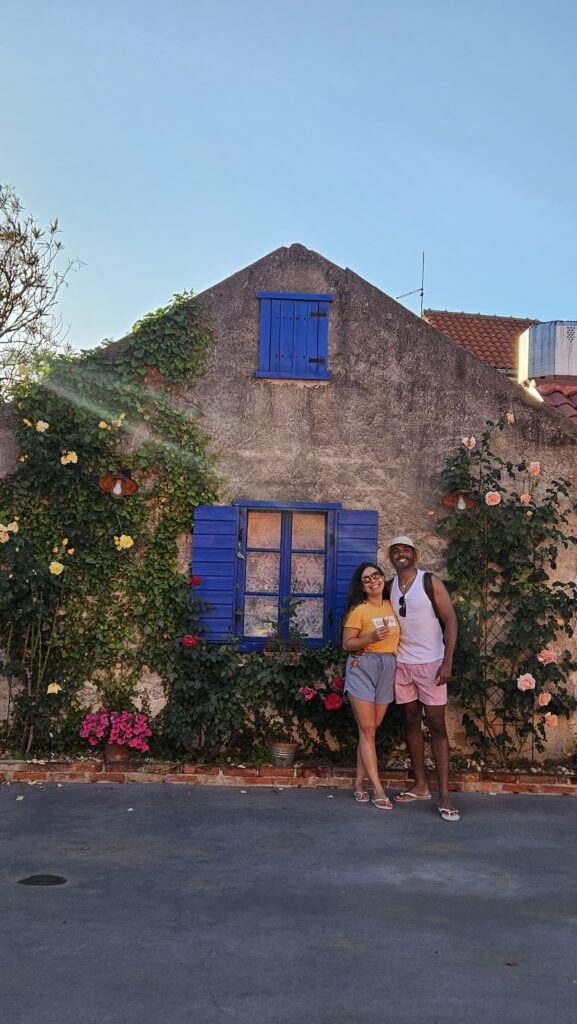
Nin has something for everyone. You can wander through the Old Town and capture special photos, filled with beauty and a history that stays with you forever. For me, arriving in Nin means literally slowing down the bike. It’s the moment to relax, have fun, and simply enjoy the ride.
Your Route to Adventure: The Exclusive Map
I’ve prepared an exclusive map with all the must-see stops so you don’t miss a thing. Our journey begins at (1) Hop And Go eBikes. From there, we head to the historic (2) St. Nicholas Church, followed by a triumphant entrance into Nin via the (3) Branimir Statue.
If you choose to explore the Old Town first, simply park and lock your bike. Make sure to visit the Roman Temple ruins and the imposing Statue of Grgur Ninski. If you’d rather hit the mud spa and the sandy beach first, head straight to (4) Mud Spa and (5) Queen’s Beach, where you can also safely lock your bike.
The route is ready for you; now, just adapt it to your own pace and expectations. Check out the map below, get your gear ready, and enjoy the ride!
CHECKLIST: WHAT TO BRING
Cash: Some local ice cream shops and cafes might not accept credit cards.
Swimsuit and towel: Essential for the mud spa and the sandy beach.
Sunscreen and water: The route is beautiful, but the sun can be intense!

Co-Founder & CEO – Hop And Go Zadar
Entrepreneur. Explorer. Writing by the sea.